Die casting:
zinc, aluminum, magnesium -
precision and industrial output
Die casting injects a liquid metal alloy under high pressure into a steel mold. Dimensional accuracy to a hundredth of a millimeter, high output rates, complex parts in a single operation. Since 1996, CadNov steers your die casting projects from A to Z.
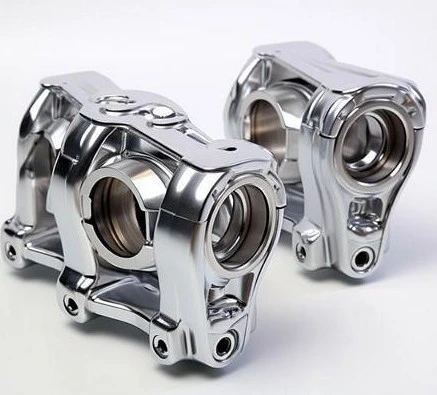
What is die casting?
Die casting consists of injecting a molten metal alloy at very high pressure (150 to 1,200 bar) into a water-cooled steel mold. The material solidifies in a few seconds, perfectly matching the cavity. The mold opens, the part is ejected, and the cycle starts again.
Unlike gravity casting (pouring by gravity), die casting achieves very thin walls (0.5 - 1.5 mm), dimensional accuracy of +/-0.05 to +/-0.2 mm and directly usable surface finishes - often with no secondary machining.
It is the metal equivalent of plastic injection: high output, precise tooling, great repeatability. The fundamental difference: you work with non-ferrous alloys (zinc, aluminum, magnesium, copper).
What CadNov brings
CadNov coordinates your die casting projects: needs qualification, choice of alloy and process (hot or cold chamber), writing the mold specifications, selecting the die caster from our France/Europe/Asia network, trial follow-up and part qualification.
Our independent-integrator position guarantees access to the best die casters with no conflict of interest. We can also tell you when die casting is more suitable than plastic injection - and vice versa.
Die casting or plastic injection?
If your part must conduct heat, withstand temperatures above 130°C, bear high mechanical loads or provide electromagnetic shielding - die casting is often the right answer. CadNov carries out this comparative analysis for you free of charge.
The die casting cycle - 5 phases
Molten alloy held at temperature in a heated crucible (hot chamber) or separate furnace (cold chamber)
Liquid metal injected into the closed mold at 150-1200 bar. Filling in 10-100 ms
Pressure held during solidification. Water cooling. 2-30 s depending on thickness
Mold opens. Ejectors push out the part. Automatic or robotic extraction
Deflashing, sprue trimming, inspection, optional surface treatments
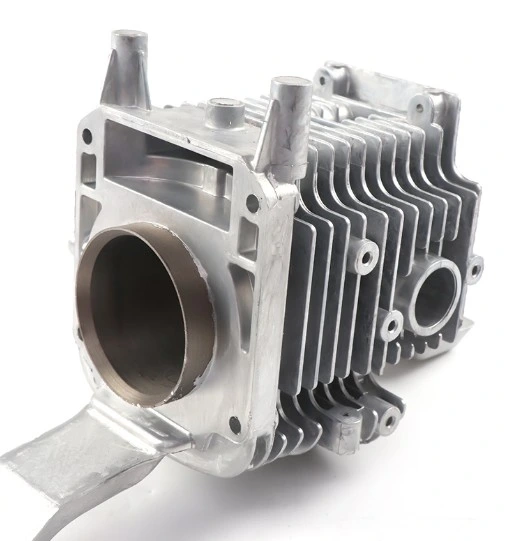
Hot chamber or cold chamber?
The choice between these two technologies depends on the alloy's melting point - it's the technical criterion that decides everything.
The injection piston is permanently immersed in the molten metal. The metal is injected directly from the crucible into the mold. Very fast cycle (10-30 s), no handling of the metal between shots.
Reserved for low-melting-point alloys that don't attack the piston: zinc, tin and lead. Aluminum, with its higher melting point, would quickly destroy the mechanism.
- Alloys: Zinc (Zamak), Tin, Lead
- Pressure: 150 - 350 bar
- Cycle: 10 - 30 s (very fast)
- Parts: small and medium (under 4 kg)
- Advantage: maximum productivity, low porosity
The molten metal is poured into a shot sleeve before each injection. The piston is not in permanent contact with the metal - so it withstands high-melting-point alloys.
Essential for aluminum and magnesium. Longer cycle than hot chamber, but the only possible solution for these high-performance alloys.
- Alloys: Aluminum, Magnesium, Copper/Brass
- Pressure: 350 - 1,200 bar
- Cycle: 30 - 90 s
- Parts: small to large (up to 30 kg)
- Advantage: high-performance alloys, large parts
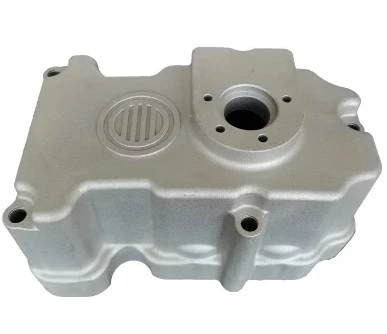
4 alloy families for die casting
Each alloy has its mechanical, thermal and economic properties. The right choice determines your part's performance and production cost.
Zamak is the reference alloy for small precision die-cast parts. Its low melting point (380-420°C) allows very fast cycles in hot chamber, exceptional mold life (up to 1 million shots) and unbeatable dimensional accuracy among metal processes.
The surface finish obtained directly is compatible with chrome plating, nickel plating, painting and vacuum metallization - with no prior machining in most cases.
Reference grade
Balance of mechanical properties / castability. The most used worldwide.
Strength + creep
Better mechanical and creep resistance. Ideal for parts under stress.
Maximum hardness
The highest hardness and strength of the Zamak family.
High strength
Possible in hot chamber. Can replace aluminum on small parts.
Aluminum is the dominant die casting alloy by volume. Light (density 2.7 vs 7.1 for zinc), a good thermal and electrical conductor, corrosion-resistant, easily machinable - it makes up 70% of die-cast automotive parts.
Melting point 660°C - cold chamber mandatory. Injection pressure 350-800 bar. The alloy grade choice is critical: each grade is optimized for a particular use.
Versatile - general use
Excellent castability, good mechanical strength. The most used grade in the world.
Sealing - marine
Better gas tightness, higher corrosion resistance. Hydraulics and marine.
French automotive standard
French automotive reference grade. Good machinability, satisfactory strength.
Structural - weldable
Copper-free - weldable, ductile, T6 treatment possible. Safety parts.
Magnesium is the lightest structural metal used in casting (density 1.8 - 35% lighter than aluminum, 77% lighter than steel). It offers the best strength-to-weight ratio of all die-cast alloys.
Its use is growing rapidly in automotive (lightweighting), electronics (ultra-thin housings) and aerospace. Melting point 650°C - cold chamber. Integrated EMI shielding, excellent vibration damping.
Reference grade
Good strength + castability. The most used in electronics and automotive.
Ductility - auto safety
High elongation (8%) for safety parts. Seats, steering, dashboard.
High-temperature creep
Creep resistance for engine parts. Under-hood engine housing.
High thermal performance
High-performance grade for demanding engine applications. Aerospace, motorsport.
Brass (copper-zinc alloy) and copper alloys are used in die casting for applications requiring excellent electrical conductivity, superior corrosion resistance or food/drinking-water compatibility.
High melting point (900-1000°C) - cold chamber essential, rapid mold wear. High material cost. Reserved for applications where copper's specific properties are irreplaceable.
Faucets, plumbing
Water corrosion resistance, drinking-water standard, excellent machinability.
Electrical connectors
Maximum electrical and thermal conductivity. Lugs, terminals, connectors.
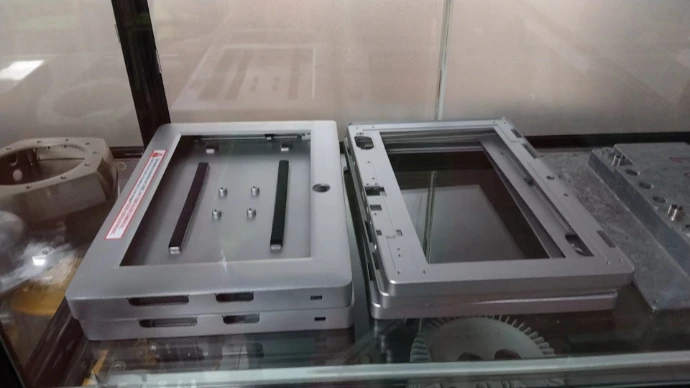
Die casting: strengths and limits
A powerful process with real constraints. Knowing both sides avoids nasty surprises.
STRENGTHS
Excellent dimensional accuracy
+/-0.05 to +/-0.2 mm depending on alloy and size. Often no machining needed. Exemplary dimensional repeatability cycle after cycle.
High output rates
10 to 90 s per cycle. Zamak in hot chamber: up to 400 shots/hour on small parts. Suited to high volumes.
Complex parts in one operation
Ribs, bosses, inserts, complex 3D geometries - obtained directly out of the mold with no secondary assembly.
Very thin walls
0.5 mm in Zamak, 0.8 mm in aluminum. Impossible in gravity casting. Light, compact, high-strength parts.
Mechanical properties superior to plastic
Strength 200-400 MPa, thermal resistance up to 200°C+, electrical and thermal conductivity, integrated EMI shielding in magnesium.
Excellent surface finish
Ra 1-3 µm directly out of the mold. Compatible with chrome plating, nickel plating, painting, anodizing with no prior machining.
LIMITS
High tooling investment
H13 steel mold: €10,000 to 200,000. Cost-effective from 5,000-10,000 parts/year depending on size. Below that, prefer gravity casting or machining.
Alloys limited to non-ferrous
No steel, no cast iron in conventional die casting. Zinc, aluminum, magnesium and copper only. For steel: forging or sand casting.
Possible porosity
Fast injection can trap air bubbles (gas porosity). Problematic for sealing and anodizing. Solution: mold evacuation (vacuum casting).
No fully closed parts
Like plastic injection, die casting does not produce closed hollow bodies. For a hollow tank: blow molding (plastic) or hydroforming (metal).
Limited heat treatments
Internal porosity often prevents heat treatments (T6 quench) for common aluminum alloys. Special grades (AlSi10MnMg) required.
Long tooling lead time
8 to 20 weeks depending on complexity. Costly mold modifications. Upstream DFM design is critical.
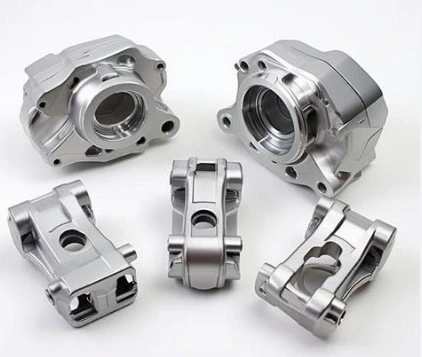
Alloy summary - die casting and functions
Choose the right alloy based on your part's functional requirements - not on habit or material cost alone.
| Alloy | Process | Density | Rm | Key strengths | Applications | Service T |
|---|---|---|---|---|---|---|
| Zamak 3 | Hot ch. | 6.6 kg/dm3 | 280 MPa | Accuracy +/-0.05 mm, direct chrome plating, fast cycle | Connectors, locks, auto trim, metal toys | 100 C max |
| Zamak 5 | Hot ch. | 6.6 kg/dm3 | 320 MPa | Improved strength + creep vs Zamak 3 | Parts under stress, hardware | 100 C max |
| ZA8 | Hot ch. | 6.3 kg/dm3 | 370 MPa | High strength, can replace aluminum | Technical parts, small mechanics | 110 C max |
| EN AC-46000 (A380) | Cold ch. | 2.7 kg/dm3 | 310 MPa | Versatile, excellent castability, economical | General auto parts, casings, housings | 150 C max |
| EN AC-43400 (A360) | Cold ch. | 2.7 kg/dm3 | 300 MPa | Superior sealing, anti-corrosion | Hydraulics, marine, sealed parts | 150 C max |
| EN AC-43500 (AlSi10MnMg) | Cold ch. | 2.7 kg/dm3 | 330 MPa (T6) | Weldable, T6 treatment, 10% elongation | Safety parts, chassis, structural | 150 C max |
| AZ91D | Cold ch. | 1.8 kg/dm3 | 230 MPa | The lightest, EMI shielding, good machinability | Electronic housings, auto housings | 120 C max |
| AM60B | Cold ch. | 1.8 kg/dm3 | 220 MPa | 8% elongation, impact resistance | Auto safety parts (seats, steering) | 120 C max |
| AS41B | Cold ch. | 1.8 kg/dm3 | 210 MPa | High-temperature creep resistance | Engine housing, under-hood parts | 150 C max |
| Brass CuZn | Cold ch. | 8.4 kg/dm3 | 350 MPa | Water corrosion resistance, drinking water | Faucets, valves, fittings, plumbing | 200 C max |
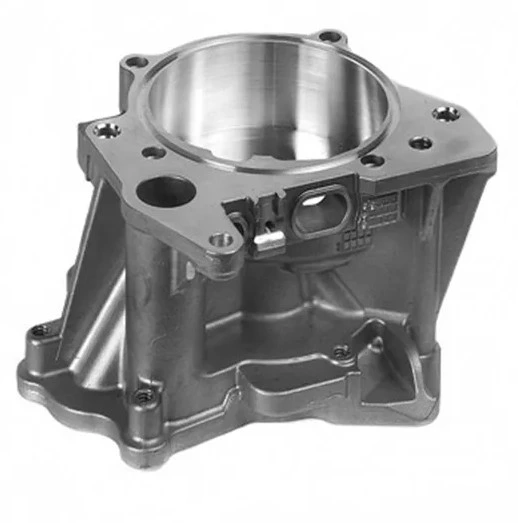
Fields of application
Die casting is present everywhere a part must be metal, precise and produced in series - from the small lock to the large automotive housing.
Automotive and Mobility
Engine and gearbox housings (aluminum), structural parts (AlSi10MnMg), embedded electronic housings (magnesium), brackets and body elements. IATF 16949 standard.
Electronics and Telecom
Ultra-thin housings for smartphones, tablets, laptops (magnesium). Connectors and terminals (Zamak). Heat sinks (aluminum). Integrated EMI shielding.
Building and Hardware
Locks, handles, window fittings, hinges, espagnolettes (Zamak). Surface finish compatible with direct chrome plating and lacquering. High volumes, competitive cost.
Plumbing and Faucets
Faucets, valves, fittings, shower heads in die-cast brass. Drinking-water compliance NF EN 12165. Water corrosion resistance.
Aerospace and Defense
Structural aluminum and magnesium parts for lightweighting. Electronic-equipment housings. AS9100, NADCAP certifications. Mandatory material-lot traceability.
Industry and Energy
Pump and compressor housings, instrument casings, industrial valve bodies, electric-motor parts. Aluminum dominant, sealing often required.
Our die casting approach
From your need to the qualified part in production - CadNov steers every step.
Needs analysis
Function, mechanical/thermal constraints, standards, volume
Alloy and process choice
Exact grade, hot or cold chamber, surface treatment
DFM and tooling
Draft angles, wall thicknesses, parting line, mold specifications
Trials and qualification
T0/T1/T2, measurements, PPAP if required, control plan
DFM rules specific to die casting
Draft angles: minimum 1° (fixed side) and 1.5° (moving side) on all surfaces. Wall thicknesses: avoid abrupt variations, use gradual transitions. Radii: minimum 0.5 mm on all internal sharp edges. Ribs: thickness 60% of the main wall. Inserts: plan for overmolding or embedded insert at design stage.
The mistakes we save you from
Choosing A380 for a safety part
A380 is excellent for general use but is not weldable and doesn't withstand T6 treatment. For an automotive safety part requiring ductility, AlSi10MnMg is essential.
Requesting anodizing on A380
A380's copper content gives poor-quality anodizing (blotchy appearance). For a part to be anodized, use a copper-free alloy like AlSi10MnMg or A360.
Ignoring porosity on machined parts
Machining can reveal internal porosity invisible on the surface. On critical sealing parts, specify a leak test + impregnation resin if needed, right from the specifications.
Innovation Tax Credit (CII)
CadNov is approved by the French Ministry (MESR). Design, prototyping and die-casting trial costs within an innovative project are eligible for the CII - up to 30% recovered.
A die casting project? Let's talk.
Free feasibility analysis within 48h - alloy, process, volume, indicative budget.
Submit my projectSee injection molding
Antoine ERRIGO · +33 (0)4 74 32 23 60 · direction@cadnov.fr · CadNov, 240 rue des Câbles de Lyon, 01000 Saint Denis Lès Bourg · CII-approved