Finishing and appearance:
turning a raw prototype
into a presentable or marketable part
Mirror polishing, painting, chrome plating, screen printing, laser engraving, vacuum metallization… CadNov coordinates 10 finishing technologies — suited to each material and each level of requirement. From the validation prototype to the premium client presentation model.
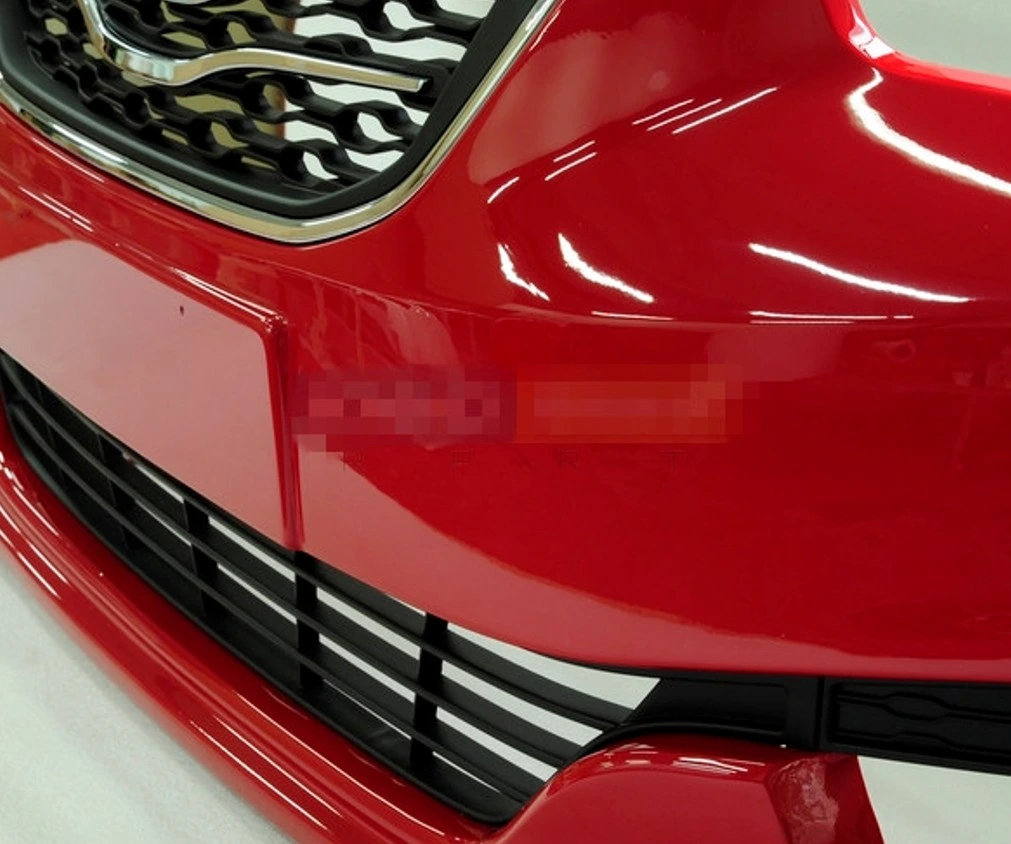
Finishing: the step that makes the difference
A prototype comes out of manufacturing in a raw state — matte surface, tool marks, visible parting lines. Without finishing, even the best technical part cannot be presented to a client or subjected to a realistic user-interface test.
CadNov coordinates the entire finishing chain: from the initial sanding to colored chrome plating or multicolor screen printing. Each step is chosen according to the part’s material, the required visual quality level and the available budget.
Critical point to factor in from the design stage: not all materials are finished the same way. A PP part cannot be painted without a special primer. A PTFE part cannot be painted at all. CadNov anticipates these constraints before starting manufacturing.
The CadNov approach:
CadNov does not outsource finishing without supervision. Each finishing file is prepared with a technical sheet specifying the part’s material, the initial surface state, the dimensional tolerances to respect after finishing and the exact color reference.
For complex finishes (colored chrome plating, vacuum metallization), CadNov always produces a pilot part validated with the client before launching the run. End-of-project surprises — poor paint adhesion, non-conforming color — are unacceptable at this stage.
Surface preparation
Sanding, dust removal, degreasing — an essential base whatever finish is chosen.
Finish application
Bonding primer if required, then chosen finish: paint, chrome plating, screen printing…
Quality control
Visual check, adhesion (ISO 2409 cross-cut test), color conformity, layer thickness.
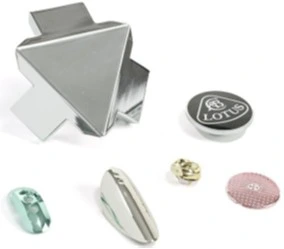
CadNov’s 10 finishing technologies
Each finish meets a specific need — aesthetic, functional or both. The indicative price is given for a medium-size part (≈ 200×200 mm).
Mirror polishing (mirror finish)
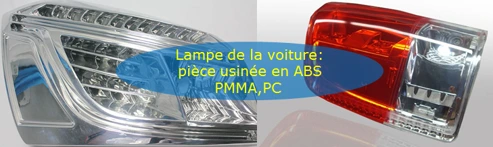
Progressive polishing (400 → 2000 papers + diamond paste + felt) bringing the surface to a Ra below 0.1 µm. The part becomes transparent (PMMA, PC) or shows a mirror gloss (ABS). A result identical to a mirror-polished injection mold.
PMMA ✓✓, PC ✓✓, ABS ✓, Steel ✓
PP, PA, POM, PTFE — irreducible grainy surface
Ra < 0.1 µm — transparency or mirror gloss
1 to 3 days by size and initial state
Screen & Pad printing
Screen printing lays ink through a screen on flat surfaces. Pad printing transfers the pattern via a soft pad onto curved or irregular surfaces — impossible with screen printing. Perfect for logos, graduations, instructions and regulatory markings.
Flat surfaces only — ABS, PC, PMMA, painted metal
All surfaces — curved, textured, irregular
1 to 6 colors (one pass per color)
3 to 7 days (screen etching + drying)
Sandblasting & Shot blasting
Projection of abrasives (sand, glass beads, corundum) creating a uniform matte effect. Used on its own for a satin effect on metal or plastic, or as preparation before painting (improves adhesion). Shot blasting introduces compressive stresses beneficial to fatigue resistance.
Metal ✓, Aluminum ✓, ABS ✓, PC ✓, SLS PA ✓
Uniform matte, satin finish, removal of tool marks
Preparation before painting or final matte finish
1 to 2 days
Painting — matte, gloss, soft-touch
Polyurethane or epoxy paint is the most versatile finish. It covers micropores, evens out the surface and gives the part its final look. Available in matte, gloss, satin, soft-touch feel (rubber effect), electrically conductive or anti-UV. Any RAL or Pantone reference.
PP, PA, RIM PU, SLS (grainy powder)
ABS, PMMA, PC, PVC, rigid PU, RIM
PTFE, POM — insufficient adhesion even with primer
2 to 5 days (drying + curing)
Chrome plating — chrome, gold, rose gold, platinum
Electroplated chrome deposits a thin metallic layer (nickel + chrome) on the part. Result: a bright metal look indistinguishable from a chromed metal part. Available in bright chrome, satin chrome, gold, rose gold, platinum. The part must be ABS or ABS+PC — an essential base for electroplating.
ABS or ABS+PC mandatory — the only properly electroplatable material
Bright chrome, satin chrome, 24K gold, rose gold, platinum
Nickel 10–20 µm + Chrome 0.2–0.5 µm
5 to 10 days (electroplating process)
Laser engraving
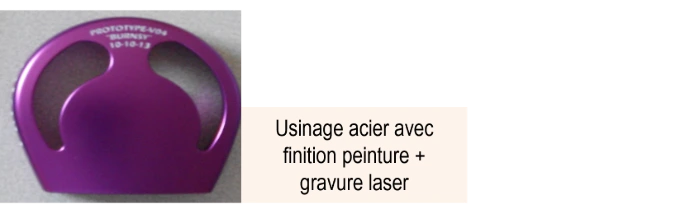
A laser beam selectively vaporizes the material to engrave logos, texts, serial numbers, QR codes or decorative reliefs. Accuracy below 0.1 mm. Permanent and indelible — impossible to erase unlike screen printing. Compatible with metal and plastic.
ABS ✓, PC ✓, PMMA ✓, PA ✓, POM ✓, PP ✓
Steel ✓, Aluminum ✓, Brass ✓, Copper ✓
< 0.1 mm — QR codes, very fine texts, details
1 to 3 days
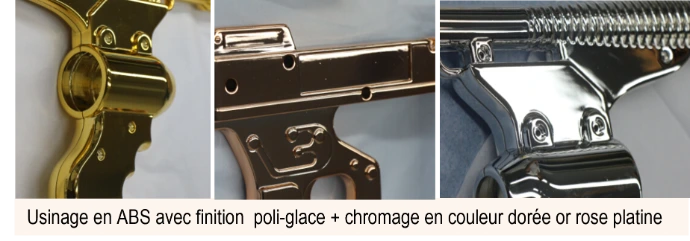
Vacuum metallization (PVD)
Physical vapor deposition (PVD) under vacuum of a nanometric metallic film (aluminum, chrome, gold, titanium) on the surface. Premium finish with an extremely fine mirror or gold look. Scratch resistance higher than electroplated chrome. Compatible with more plastics than chrome plating.
ABS ✓, PC ✓, PMMA ✓, PA ✓, PU ✓ — broader than chrome plating
Mirror chrome, aluminum, gold, golden titanium, black titanium, iridescent
0.1 to 5 µm (nanometric)
5 to 10 days
Heat treatment (annealing & quenching)
Annealing removes the internal stresses created during machining or 3D printing — preventing delayed warping that sometimes appears days after manufacturing. Quenching improves the hardness of machined aluminum parts. Essential for precision parts or tight assemblies.
ABS, PC, PMMA: 60–80°C for 4–8h in an oven
DMLS machined aluminum: 250–350°C — steel: 550–650°C
Dimensional stability, no delayed warping
1 to 3 days (cycle + cooling)
Powder coating (thermosetting)
An electrostatically charged epoxy or polyester powder is sprayed onto the part, then cured in an oven (160–200°C). Result: a hard, uniform coating, resistant to impact, scratches and UV — superior to liquid paint. Used on metal and aluminum, and on high-temperature plastics.
Aluminum ✓, Steel ✓, Brass ✓ — PPS, PSU for high-T° plastics
ABS, PP, PC, PMMA — cannot withstand 160–200°C
Higher than liquid paint — impact, scratch, UV resistance
3 to 5 days
Anodizing (aluminum)
Electrochemical anodizing oxidizes the aluminum surface, creating a hard, protective alumina layer. This layer can be colored before sealing with a wide variety of dyes. Result: a very hard surface (70 HV → 400 HV), corrosion-resistant, lightly tinted or deeply colored.
Aluminum ONLY — does not apply to other materials
Natural (silver-gray), colored (black, red, blue…), hard (military)
Standard: 5–25 µm / Hard: 25–100 µm
3 to 7 days
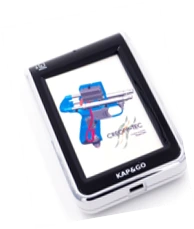
Finish / material compatibility — the critical table
Before choosing a finish, check that your material is compatible. Some combinations are impossible — others require special preparation. CadNov anticipates this systematically.
| Material | Mirror polish | Paint | Chrome | PVD | Screen print | Laser engraving | Powder | Anodizing | Sandblasting |
|---|---|---|---|---|---|---|---|---|---|
| ABS | ●Mirror gloss | ●Direct | ●Optimal | ● | ● | ● | ✗Oven T° too high | ✗Aluminum only | ● |
| PMMA | ●Perfect transparency | ●Direct | ◐With primer | ● | ● | ● | ✗ | ✗ | ◐Caution: embrittlement |
| PC | ●Transparency possible | ●Direct | ◐With primer | ● | ● | ● | ✗ | ✗ | ● |
| PP | ✗Grainy surface | ◐Special PP primer mandatory | ✗ | ◐Difficult | ◐Limited adhesion | ● | ✗ | ✗ | ● |
| POM / Acetal | ◐Average result | ✗Insufficient adhesion | ✗ | ✗ | ✗ | ● | ✗ | ✗ | ● |
| PA / Nylon | ◐Grainy SLS | ●With primer | ✗ | ◐With primer | ●With primer | ● | ✗ | ✗ | ●Improves SLS look |
| PTFE / Teflon | ◐ | ✗No adhesion possible | ✗ | ✗ | ✗ | ● | ✗ | ✗ | ◐ |
| PPS / PSU / PEEK | ◐ | ●With suitable primer | ✗ | ◐ | ● | ● | ●Withstands the oven | ✗ | ● |
| Aluminum | ●Metal mirror polish | ● | ◐Nickel plating before chrome | ● | ● | ● | ● | ●Aluminum-specific | ● |
| Steel | ● | ● | ● | ● | ● | ● | ● | ✗Aluminum only | ● |
● Compatible | ◐ Possible with care | ✗ Not advised or impossible
What to know before choosing a finish
Some material + finish combinations are impossible or require specific precautions that CadNov anticipates systematically.
⚠ Caution — impossible or risky combinations
PP cannot be painted directly. Polypropylene has a very low surface energy — paint does not adhere without a plasma treatment or a special chlorinated primer. This primer is available but adds cost and lead time. If the part must be painted, prefer ABS.
POM and PTFE cannot be painted. No standard primer ensures sufficient adhesion on these materials. Laser engraving remains the only possible finish for marking.
Electroplated chrome requires ABS. Only ABS (and ABS+PC) electroplates properly. A part in pure PC, PA or PMMA cannot be chromed by electroplating — use vacuum metallization (PVD) instead.
Powder coating requires 160–200°C. ABS, PP, PC, PMMA and PA cannot withstand this temperature — they warp in the oven. Reserved for metal parts and high-temperature plastics (PPS, PSU).
Mirror polishing is impossible on PP, PA or POM. These materials have a grainy semi-crystalline molecular structure that polishing cannot erase. The surface stays opaque no matter how much polishing is done.
✓ The best material / finish combinations
ABS + colored chrome. ABS is the best base for electroplated chrome — gold, rose gold, platinum, bright chrome. A finish indistinguishable from a metal part. Used in luxury cosmetics, automotive, watchmaking.
PMMA or PC + mirror polish. These two materials reach a transparency and mirror gloss equivalent to glass after polishing. Ideal for optics, windows and transparent parts before a mirror-polished mold.
ABS or PC + all-color painting. These two materials are painted directly, without primer, with excellent adhesion. Any RAL or Pantone color, matte or gloss, soft-touch or conductive.
Machined or DMLS aluminum + anodizing. Hard anodizing (military grade) reaches 400 HV hardness — the aluminum part becomes scratch- and corrosion-resistant, with a deeply integrated color.
Any material + laser engraving. Laser engraving is the only universally compatible finish — ABS, PC, PP, PA, POM, PTFE, steel, aluminum, brass. A permanent, precise, contactless result.
Choosing the right finish for your need
This quick guide points you by your goal — CadNov finalizes the choice with you.
Premium client presentation
Part meant to be shown to an investor, a trade show or a product launch.
Recommended: Final-color paint + logo screen printing + mirror-polished transparent zones
Budget: €€€ — 200 to 1 500 €
Functional validation
Part for assembly, snap-fit or user-interface tests — appearance secondary.
Recommended: Sandblasting for a uniform surface, no paint
Budget: € — 30 to 100 €
Cosmetics and luxury
Cosmetic part, luxury accessory, jewelry — precious-metal look or perfect transparency.
Recommended: Mirror polish + colored chrome (gold, rose gold, platinum) or PVD metallization
Budget: €€€€ — 300 to 2 000 €
Medical and industry
Part that must be cleaned regularly, resistant to disinfectants, with permanent marking.
Recommended: Resistant PU paint + laser-engraved serial number
Budget: €€ — 100 to 400 €
Automotive and transport
Exterior or interior part — UV resistance, impact resistance, look matching the production part.
Recommended: Anti-UV paint + chromed zones (electroplated on ABS) + screen printing
Budget: €€€ — 200 to 1 000 €
Industrial and outdoor
Aluminum or steel part for an outdoor or industrial environment — corrosion resistance.
Recommended: Hard anodizing (aluminum) or powder coating (steel/aluminum)
Budget: €€ — 60 to 300 €
CadNov’s golden rule: anticipate the finish before choosing the material
The finish must be decided BEFORE choosing the material — not after. A PP part may be cheaper to make, but if it must be painted, the special primer cancels the savings. An ABS part allows every finish without constraint. CadNov builds this logic in from the design phase.
Our finishing and appearance approach
Finishing technical sheet
Material, initial surface state, RAL/Pantone color reference, tolerances to respect after finishing.
Validation before the run
For complex finishes (chrome, PVD), a pilot part validated with the client before launching the run.
Run + inspection
Production, visual and adhesion check (ISO 2409 cross-cut test), delivery with report on request.
Lead times and pricing — how CadNov quotes
The cost of a finish depends on 4 factors: the part’s surface area, geometric complexity (hard-to-reach concave shapes), the number of colors or passes, and the level of preparation required (sanding, primer). CadNov provides a detailed finishing quote with every manufacturing quote.
What CadNov guarantees
Material / finish compatibility verified
No finish incompatible with your material will be proposed or launched without warning you. CadNov checks compatibility before starting.
Color matching the reference
The color reference (RAL, Pantone or supplied sample) is checked on receipt — not just on the pilot part. Any deviation flagged before delivery.
Complete quote, finishing included
The CadNov quote always includes the finishing cost — not just the raw part. No surprises at the end of the project.
A project with finishing requirements? Let’s talk.
Send your 3D file, the planned material and your color reference. CadNov proposes the right finish with a complete quote.
Request a quoteSee CNC plastic machiningAntoine ERRIGO · +33 (0)4 74 32 23 60 · direction@cadnov.fr · CadNov, 240 rue des Câbles de Lyon, 01000 Saint Denis Lès Bourg · CII-approved