CNC plastic machining:
from the small precision part
to the full-size dashboard
Prototypes in the real production material, mirror-polished transparent parts, large multi-block parts assembled and painted - CNC plastic machining covers every geometry and every material. CadNov is CII-approved.
From your CAD file to the part in a few days
CNC plastic machining means programming a machine tool from your 3D file (STEP or IGS), then removing material from a solid plastic block until the desired part is obtained. The part is then finished to your needs: polishing, painting, screen printing, chrome plating.
Unlike additive processes (SLA, sintering), we work directly in the final material - ABS, PMMA, PC, POM, PA, PP, PPS, PTFE, PSU, PEEK - with the exact mechanical, thermal and chemical properties of the part that will be produced in series.
STEP / IGS file
CAM programming from the 3D model
CNC machine tool
Milling or turning in the chosen material
As needed
Polishing, painting, chrome plating, screen printing
What CadNov brings
CadNov selects the exact material suited to your functional requirements, programs the machining and coordinates the finishing. We hold a stock of plastic plates and bars available immediately - otherwise sourced within 48 to 72h.
Plastic machining at CadNov always includes a DFM check: we flag any risks in your geometry before starting the machining.
Why machine rather than prototype in resin?
Real functional validation. A part machined in PP tests the real properties of PP - an SLA resin tells you nothing about the mechanical or thermal behavior of the production part.
Decisive savings before the mold. Detecting a design problem on a machined prototype (a few hundred euros) costs 10 to 100 times less than a rework on an injection mold.
The only option for PTFE, PEEK, PSU, PVDF. These high-performance materials can only be prototyped by machining - no additive process reproduces them faithfully.
Accuracy +/-0.05 mm. Higher than any additive process. Essential for assemblies, sealing tests and functional fits.
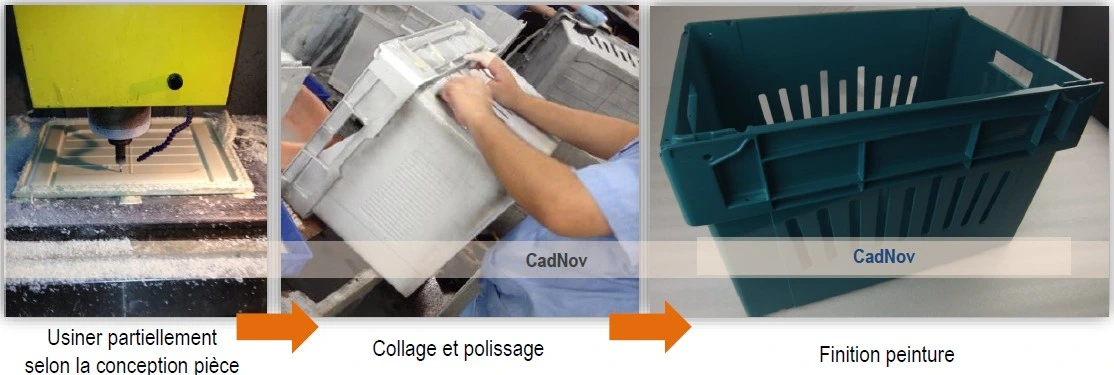
Large parts: multi-block machining, bonding and finishing
Plastic machining is not limited to small precision parts. CadNov produces prototypes of every size - including parts larger than a single plastic block.
When the part is too large to be machined from a single block, CadNov splits it into complementary sections, machines them separately, then joins them by structural bonding. After sanding the joints and paint finishing, the part is indistinguishable from a one-piece part.
This approach makes it possible to produce very large prototypes - dashboards, hoods, body panels, industrial crates, large machine housings - in any plastic material, with the same finishing options as a small part.
The result: a prototype that matches the final requirement - right material, right dimensions, right surface appearance - delivered in 2 to 3 weeks, without investing in a mold.
Concrete example: automotive dashboard
A complete dashboard is machined in ABS in several complementary blocks according to the part's geometry. The sections are joined by structural bonding, the joints are sanded and smooth, then the part is painted with an anti-UV finish. A functional, representative prototype, delivered in 2 to 3 weeks.
Partial machining
Each block machined separately in ABS
Bonding
Structural assembly of the sections
Polishing
Joints erased, smooth surface
Painting
Anti-UV / textured paint finish
Example from CadNov: crate 600 x 400 x 370 mm
Large crate made in multi-block ABS, joints bonded and polished, colored paint finish. A result indistinguishable from an injected part - without mold investment, in a few days.
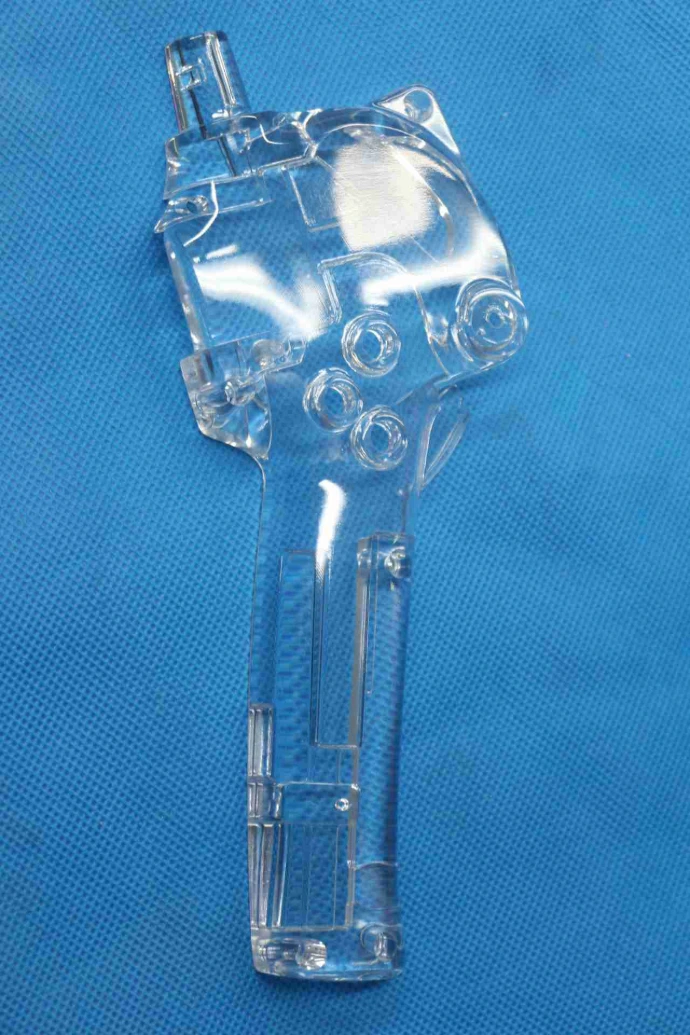
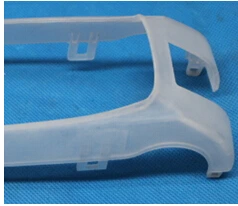
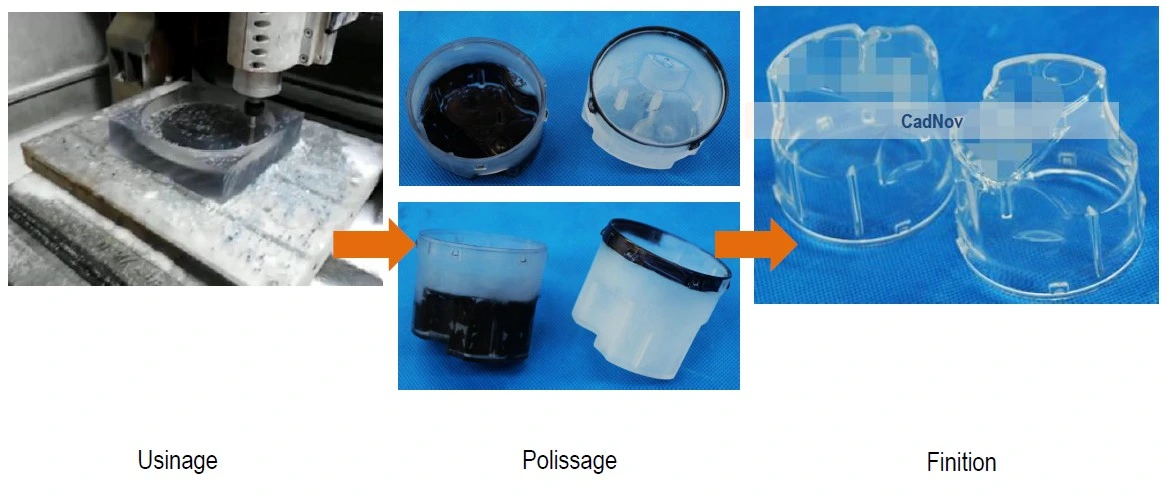
Transparent parts: mirror-polished PMMA and PC
Machining is the only prototyping process that achieves optical transparency comparable to glass - without a mold, without a substitute resin.
PMMA (acrylic) and PC (polycarbonate) can be machined then polished to a "mirror" state - a roughness Ra below 0.1 µm. The part becomes perfectly transparent, with optical quality close to glass.
This transparency is impossible to achieve with an SLA prototype (opaque resin) or SLS (sintered powder). Machining is the only way to validate optics, backlighting effects or the look of a transparent part before ordering a mirror-polished mold.
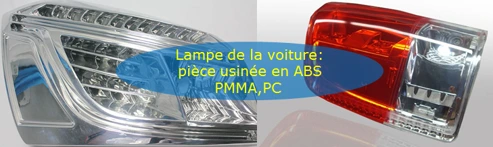
Direct applications: car lights and lamps (ABS + PMMA + PC), instrument windows, medical device covers, premium cosmetic parts, model glazing.
Mirror-polish process - 3 steps
Finish milling Ra 1 µm - light passes, tools suited to PMMA/PC
Grit paper 400 - 600 - 800 - 1,200 - 2,000 progressively
Felt + diamond paste - Ra below 0.1 µm - perfect transparency
Crystal transparency
92% light transmission - close to optical glass. Naturally glossy surface. Excellent UV resistance.
Transparency + strength
Impact resistance 30 to 50 times higher than PMMA. Transmission 87%. Heat resistance up to 120°C.
CadNov automotive examples
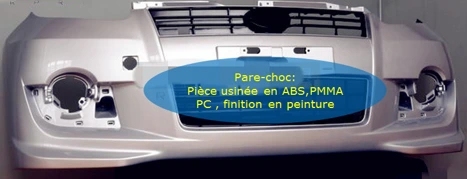
Dashboard (ABS + PMMA + PC), car lamps (ABS + PMMA + PC gloss-polished), rear lights, trims (ABS anti-UV paint), door panels (ABS/PMMA/PC + electroplating + plate). All made at CadNov in the real material with complete finishing.
Advantages and limits of plastic machining
Being honest about the limits helps you choose the right technology for each project.
Advantages
Real production material
We machine in the exact ABS, PA, PEEK you will use in production - not a substitute, not a similar resin. Mechanical, thermal and chemical tests are representative.
Very good finish achievable
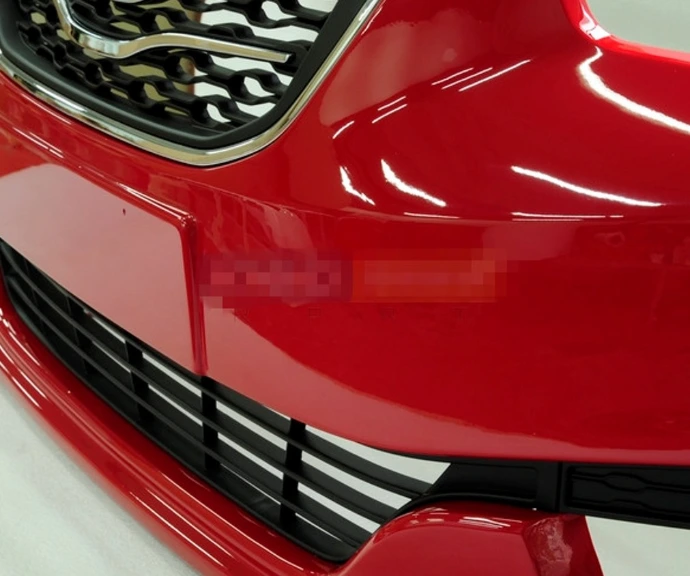
Mirror polish, paint, chrome plating, screen printing - the prototype can reach the visual level of a marketable product, including on large assembled parts.
Good dimensional accuracy
+/-0.05 mm on request. Higher than any additive process. Ideal for functional assemblies, fits and sealing tests.
Wide choice of materials
ABS, PMMA, PC, POM, PA, PP, PPS, PTFE, PSU, PEEK, PVDF - including materials impossible to prototype otherwise (PTFE, PEEK, PSU).
Large parts possible
No size limit thanks to the multi-block and structural bonding technique. A complete dashboard can be machined, assembled and painted in a few weeks.
Affordable price
Competitive unit cost for 1 to 50 parts. No tooling investment. Ideal for early validations before ordering a mold.
Limitations
Longer lead time than additive processes
6 to 8 days of manufacturing - versus 2 to 3 days for stereolithography (SLA) or 2 to 5 days for sintering (SLS). If speed matters more than material quality, SLA remains faster.
Delivery time to anticipate
On top of the manufacturing time comes the delivery time depending on the processor's location. CadNov coordinates to minimize the impact, but it must be built into the project schedule.
Closed geometries impossible
No closed hollow bodies (tank type), no complex undercuts without secondary operations. Highly nested geometries or internal channels are better made in SLA or SLS.
Non-bondable materials: mind the assemblies
POM, PA, PP, PTFE, PSU do not bond easily. Multi-block assemblies must be designed with screwing or overmolding rather than bonding on these materials.
Higher part cost beyond 50 units
For quantities above 50 parts, an aluminum prototype mold often becomes more economical on total cost. Machining is the 1 to 50 parts solution.
10 finish types available
Machining is the shaping step - finishing is what turns a raw part into a presentable, testable or marketable prototype. CadNov coordinates the whole chain.
Mirror polish
Ra below 0.1 µm. Perfect PC/PMMA transparency. Mirror gloss on ABS.
Paint
Matte, gloss, soft-touch, electrically conductive, anti-UV. All RAL colors.
Screen printing / Pad printing
Marking of logos, text, graduations on flat or curved surfaces.
Chrome plating
Bright chrome, gold, rose gold, platinum on ABS. Full metal look.
Vacuum metallization
Metallic vacuum deposition - chrome or aluminum, premium luxury finish.
Laser engraving
Text, logos, serial numbers, fine reliefs on any surface.
Powder coating
Electrostatic powder paint - superior uniformity and resistance.
Anodizing
On machined aluminum parts. Various colors, protection, hardness.
Sandblasting
Surface satin finish, paint preparation, uniform matte effect.
Heat treatment
Annealing of internal stresses, quenching on machined aluminum or steel.
Standout example: mirror-polished ABS + colored chrome plating gold / rose gold / platinum
CadNov has produced machined ABS parts with a mirror-polish finish followed by colored chrome plating (gold, rose gold, platinum) - a result identical to a production chrome part, achieved in a few days without any mold. Applications: luxury accessories, cosmetics, automotive, presentation parts.
Machinable plastic materials - CadNov stock
All these materials are available in stock or on fast order. CadNov selects the exact grade matching your functional requirements - never a substitute.
| Material | Availability | Density | Max T | Key characteristics | Prototype applications |
|---|---|---|---|---|---|
| ABS | In stock | 1.2 | 70-80°C | General strength, bondable, paintable, electroplatable. Transparent ABS available. | Housings, shells, dashboard, panels, automotive models |
| PMMA / Acrylic | In stock | 1.19 | 80°C | Glossy, 92% transparency, bondable, paintable, exceptional mirror polish, UV resistance | Windows, optics, car lights, glazing, signage, cosmetics |
| PC (Polycarbonate) | On order | 1.20 | 120°C | Transparency + exceptional impact resistance, spray-paintable, mirror polish possible | Impact-resistant optics, safety windows, car headlights, medical |
| POM (Acetal) | In stock | 2.0 | 110°C | Good strength, wear resistance, dimensional accuracy - does not bond | Gears, slides, cams, precision mechanical parts |
| PP | In stock | 1.1 | 100°C | Good strength, chemical resistance, food-inert - does not bond | Food parts, bins, lids, light chemistry |
| PPS | In stock | 1.35 | 200°C | Hard material, wear resistance, paintable, high thermal resistance | High-temperature parts, electronics, automotive under-hood |
| PTFE / Teflon | In stock | 2.2 | 250°C | Universal chemical resistance, near-zero friction - does not bond | Chemical seals, tribology, electrical insulators, medical |
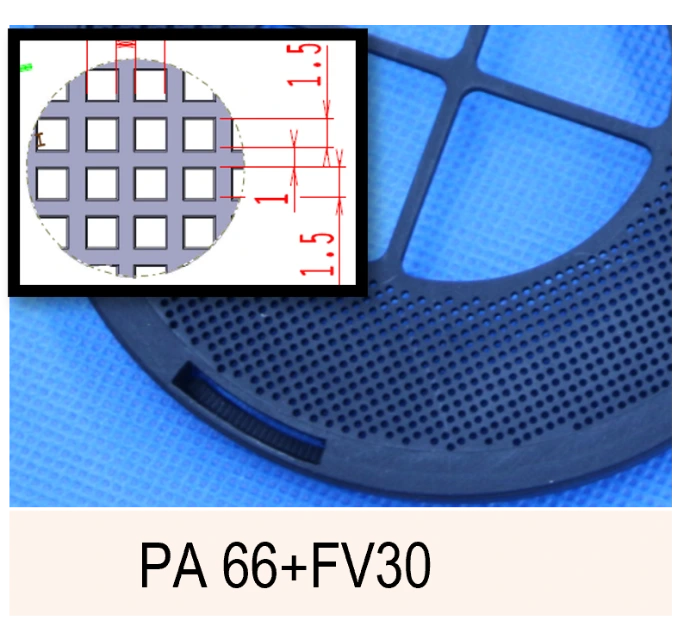
| PA / Nylon (PA6, PA66+GF30, PA12) | In stock | 1.2 | 120°C | Good mechanical strength, sliding, impact resistance - does not bond | Gears, gearworks, wear parts, supports, automotive under-hood |
| PSU (Polysulfone) | In stock | 1.24 | 180°C | High thermal resistance, chemical resistance, amber transparent - does not bond | Medical (sterilizable), aerospace, high-temperature parts |
| 475 Plastic | In stock | 1.2 | 70-80°C | Flexible, low strength | Flexible parts, soft seals, elastomer prototypes |
| PEEK | On order (48h) | 1.32 | 250°C | Extreme thermal resistance, maximum chemical and mechanical resistance, biocompatible | Medical implants, aerospace, oil/gas, high performance |
| PVDF | On order (72h) | 1.78 | 150°C | Exceptional chemical resistance, ultra-high purity | Semiconductors, fine chemistry, food, medical |
| Copper, Aluminum, Brass, Steel also machinable at CadNov (see the General and precision machinery page) | |||||
Systematic and free CadNov material advice
Before each order, CadNov checks that the chosen material is well suited to the final application: thermal resistance, chemical resistance, regulations (REACH, FDA, ISO 10993), suitability for bonding and finishing. This check takes 10 minutes and can save a pointless prototype.
Applications by field
From automotive to medical, from luxury to industry - CNC plastic machining is used everywhere the real material is essential from the prototype stage.
Automotive
Steering wheel (ABS), dashboard (ABS + PMMA + PC multi-block), lamps and lights (ABS + PMMA + PC gloss-polished), trims (ABS anti-UV), door panels (ABS + paint + electroplating).
Electronics and Telecom
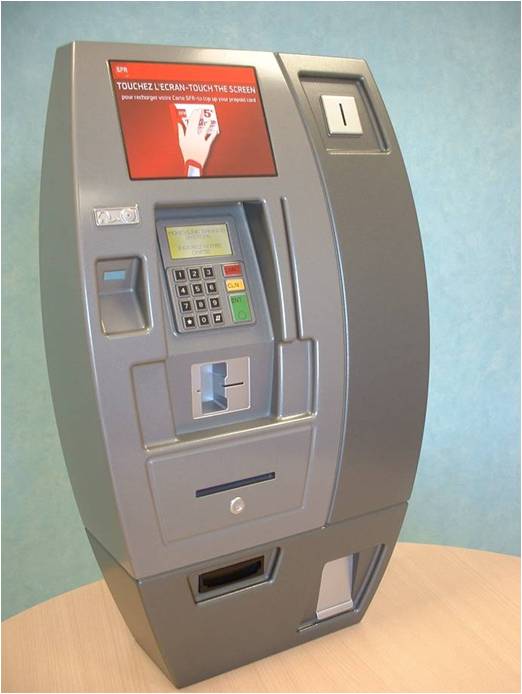
Equipment housings (ABS), screen covers (ABS + PC), support plates, operator interfaces. Paint, screen printing and laser engraving finishes available.
Medical and Laboratory
Medical equipment shells (ABS), biocompatible parts (PEEK, sterilizable PSU), lab components (PP, chemical-resistant PTFE), optical windows (mirror-polished PMMA/PC).
Cosmetics and Luxury
Bottles and caps (ABS + gold/platinum chrome plating), transparent parts (mirror-polished PMMA), applicators (PP). Mirror-polish + metallization finish for an instant luxury look.
Mechanical and Tribology
Gears (POM, PA66+GF30), slides and guides (POM), pulleys, cams, wear parts (PA+GF, PEEK), guide bushings (PTFE, POM).
Industry and Chemistry
Solvent-resistant parts (PP, PTFE, PVDF), high temperature (PPS 200°C, PSU), sealing parts (PTFE), under-hood components (PPS, PA66+GF30).
Our plastic machining approach
From your CAD file to the delivered part - CadNov manages the entire process.
STEP / IGS file
DFM analysis included - reply within 24h
CAM + CNC
3/4/5-axis milling or turning depending on geometry
As needed
Polishing, painting, chrome plating - dimensional inspection
Accepted file formats
STEP (.stp), IGES (.igs), SolidWorks (.sldprt), CATIA (.CATPart), Parasolid (.x_t). For simple parts, a 2D dimensioned drawing (PDF or DXF) is enough. Reverse engineering (3D probing) available on existing parts.
What you get - guaranteed
Real material - no substitute
You order in ABS - you receive ABS, not a similar PU. Material conformity sheet available on request. Exact grade, not just the family.
Confirmed dimensional accuracy
Standard tolerance +/-0.1 mm, +/-0.05 mm on request. 100% inspection of critical dimensions. Inspection report available.
Prototype matching the final product
Small precision part or large assembled dashboard - the CadNov prototype is representative of the production part in material, shape and finish.
Innovation Tax Credit (CII) - CadNov approved by the French Ministry (MESR)
The machining costs of plastic prototypes within an innovative project are eligible for the CII - up to 30% recovered on the invoice. CadNov supports you in preparing the file.
A plastic machining project? Quote in 24h.
Send your STEP file and your requirements - material, quantity, surface finish. Answer within 24h.
Request a quoteSee plastic injection moldingAntoine ERRIGO · +33 (0)4 74 32 23 60 · direction@cadnov.fr · CadNov, 240 rue des Câbles de Lyon, 01000 Saint Denis Lès Bourg · CII-approved