3D printing:
8 technologies, plastic and metal,
from prototype to small production runs
SLA, SLS, MJF, DLP, PolyJet, DLS Carbon, DMLS/SLM metal - each technology meets specific needs. Some even allow small production runs. CadNov selects the optimal technology for your project and coordinates production. CII-approved.
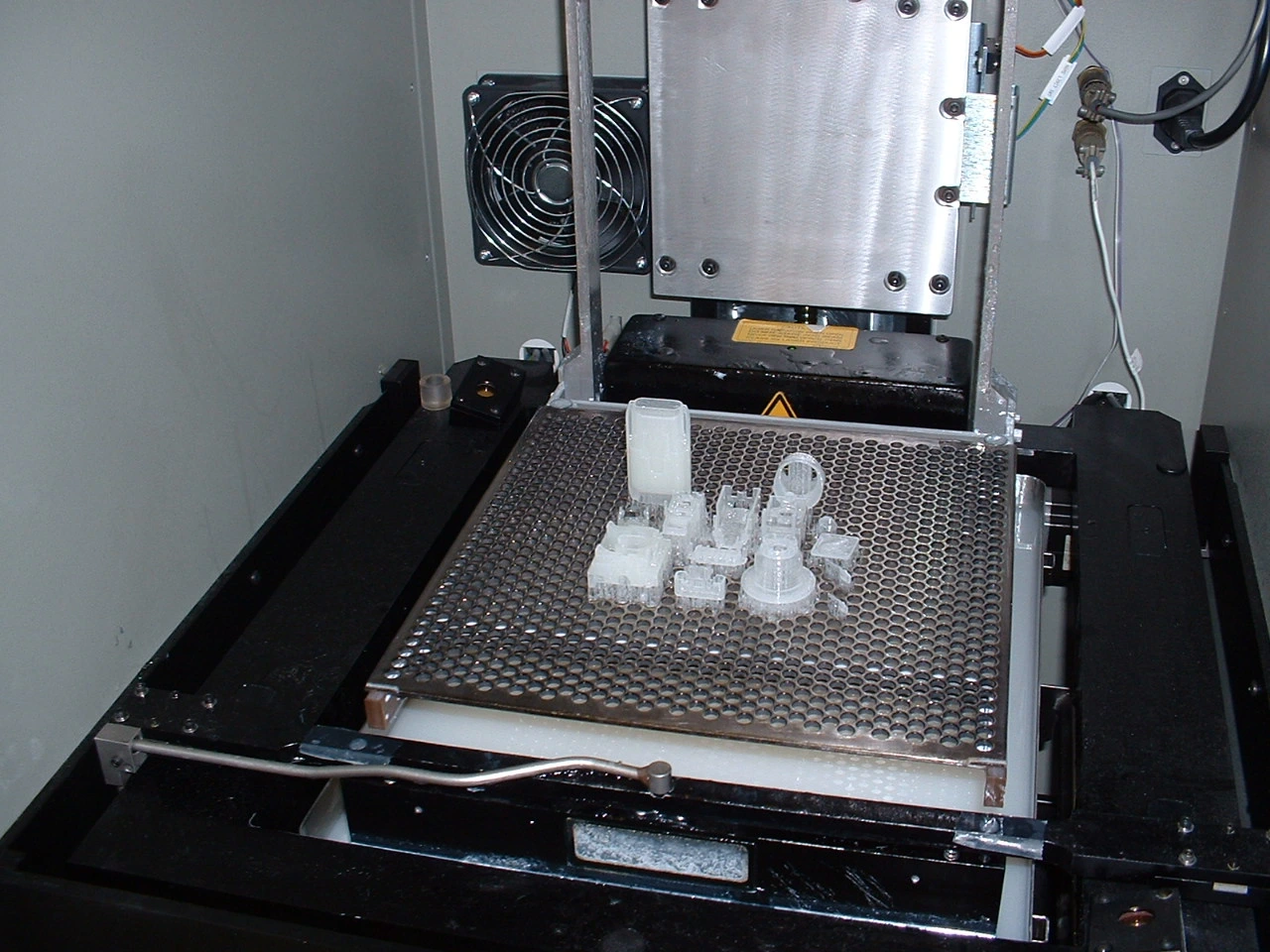
3D printing (additive manufacturing) builds a part layer by layer from a 3D file. Unlike machining (material removal), additive manufacturing adds material only where it's needed - enabling internal geometries impossible otherwise: cooling channels, lightweight lattices, monolithic assemblies.
But not all 3D printing technologies are equal. SLA produces impeccable surfaces but in brittle resin. SLS gives functional PA parts without supports. DMLS/SLM produces high-performance metal parts. MJF enables small production runs. You have to choose.
But not all 3D printing technologies are equal. SLA produces flawless surfaces but in brittle resin. SLS gives functional PA parts with no supports. DMLS/SLM produces high-performance metal parts. MJF enables short production runs. You have to choose.
What CadNov brings
CadNov is not equipped with 3D machines. We are your design office and integrator: we qualify your need, select the technology and the right partner from our network of certified manufacturers, follow production and control quality.
Our added value: keeping you from choosing the wrong technology. Asking for SLA where SLS is needed, or ordering PolyJet where MJF would be 3 times cheaper - these mistakes cost time and money. CadNov carries out this selection free of charge.
Prototyping or small production runs?
Some technologies like MJF (HP), SLS and Carbon DLS now allow production of 50 to 1,000 parts competitively - without a mold. CadNov tells you from what point a mold becomes more economical.
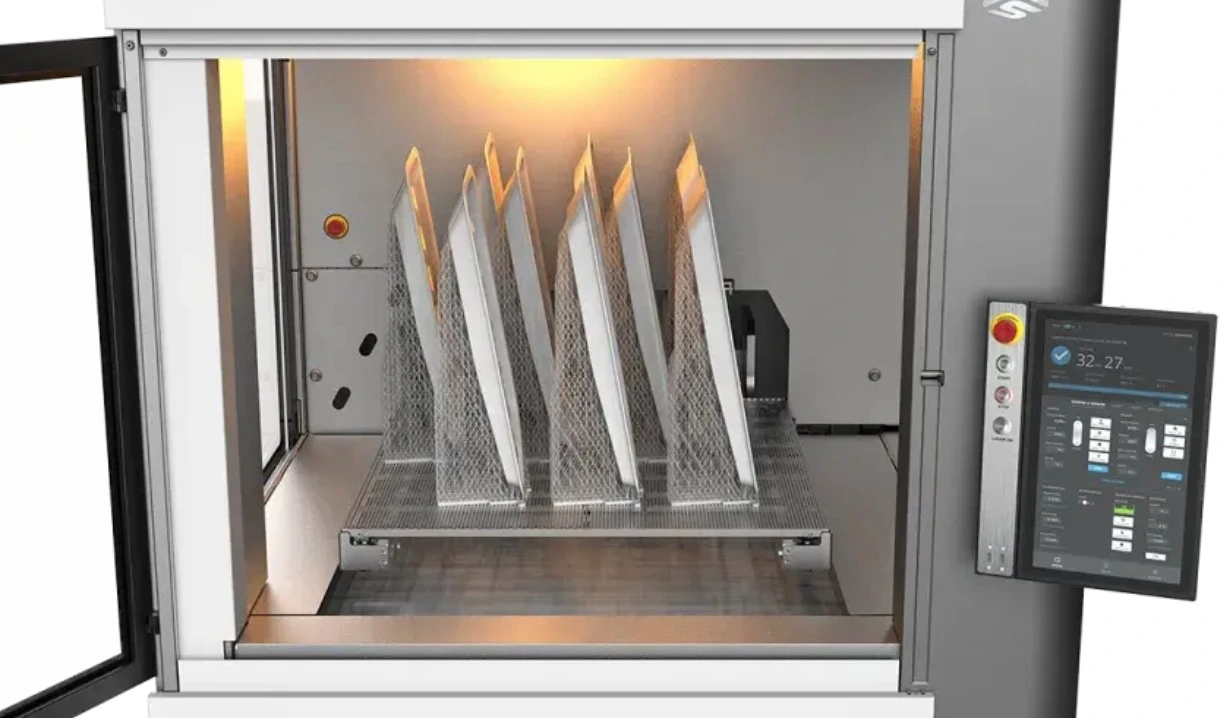
Comparison of the 8 3D printing technologies: stereolithography (SLA), laser sintering (SLS) and Multi Jet Fusion (MJF)
Each technology has its area of excellence. This table helps you identify the right option — CadNov finalizes the selection with you.
| Each technology has its area of excellence. This table helps you identify the right option - CadNov finalizes the selection with you. | Technology | Materials | Precision | Surface finish | Mech. strength | Small run | Lead time |
|---|---|---|---|---|---|---|---|
| Unit cost | SLA (Stereolithography) | Epoxy resins | Very good | Excellent | Brittle | No | 2-3 d |
| Low | DLP | Epoxy resins | Photopolymer resins | Excellent | Good | Limited | 2-3 d |
| 1-2 d | PolyJet | Very good | Very good | Excellent | Brittle | Multi-material resins | 2-4 d |
| High | SLS (Powder sintering) | Photopolymer resins | PA12, PA11, PA+GF, TPU | Photopolymer resins | Grainy | Yes (50-200) | 3-5 d |
| MJF - Multi Jet Fusion HP (starred) | Medium | Photopolymer resins | Photopolymer resins | Very good | PA12, PA11, TPU, PA12-GB | Multi-material resins | Yes (up to 1000) |
| Carbon DLS (starred) | Low in series | Epoxy resins | Very good | Very good | EPU, RPU, FPU, CE, SIL | Yes (production) | 3-5 d |
| 1-3 j | DMLS / SLM (metal) | Epoxy resins | Alu, Stainless, Ti, Inconel | Very good | Good (sanded) | 5-10 d | 2-4 d |
| SLM metal (full melt) | Alu, Stainless, Ti, CoCr | Epoxy resins | Photopolymer resins | Max | Good (sanded) | 5-12 d | 2-4 d |
starred = technologies enabling small industrial runs (50 to 1,000+ parts)
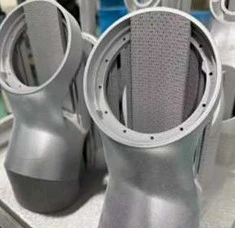
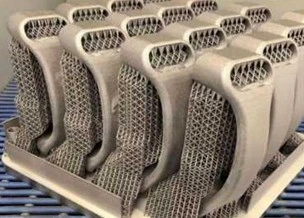
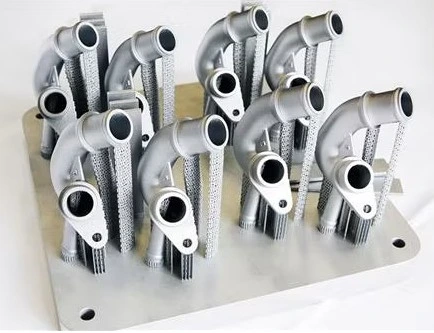
5 technologies for plastics and resins - each with its precise area of excellence.
5 technologies for plastics and resins — each with its own specific area of excellence.
A UV laser traces each layer on the surface of a liquid photosensitive resin, solidifying it point by point. SLA produces the finest surface finish of all plastic technologies - details under 0.1 mm are reproducible. The reference technology for aesthetic validation and vacuum-casting molds.
ABS-like (white, gray, transparent, yellow), high-temperature resins (PerForm 220°C), flexible resins, transparent resins
Precision +/-0.1 mm - Layer 0.05-0.15 mm - Max size 800x800x450 mm - Tensile 38-61 MPa - T 39-69°C
Aesthetic validation, marketing mock-ups, vacuum-casting molds, very complex shapes, fine details, 2-3 days lead time
DLP projects the entire image of a layer at once using a UV projector - unlike SLA which traces point by point. Result: higher speed for small parts, with a finish almost equivalent to SLA. Ideal for dental parts, jewelry and small components in large quantities.
Rigid resins, flexible resins, biocompatible resins (dental, medical), castable resins (jewelry)
Precision +/-0.05 mm - Layer 0.025-0.1 mm - Lead time 1-2 days - Faster than SLA on small formats
Small precise parts (jewelry, dental), large quantity of small components, urgent lead time
Print heads deposit droplets of photopolymers instantly cured by UV. PolyJet's unique feature: multiple materials in the same part. It's possible to combine rigid and soft zones, translucent and opaque, in a single object - without assembly. The best surface finish of all technologies.
Rigid (VeroWhite, VeroBlack), soft (TangoPlus Shore A 27-95), transparent, biocompatible, high-temperature (ABS-like 100°C)
Precision +/-0.1 mm - Layer 16-32 µm (the finest) - Simultaneous multi-material - Excellent surface straight away
Rigid + soft two-material prototypes, luxury mock-ups, medical models, premium client presentations
A CO2 laser selectively sinters (fuses) a plastic powder layer by layer. No supports are needed - the unsintered powder naturally supports overhangs. This enables complex geometries, integrated assemblies and functional hinges impossible in injection. Mechanical properties are close to injection thermoplastics.
PA12 (white), black PA12, PA+GF30 (glass-filled Nylon), rubber-like TPU, CarbonMide (carbon), reinforced aluminum
Precision +/-0.3 mm - T 146-170°C (PA) - Rm 46-48 MPa - Size 680x560x360 mm - Lead time 3-5 days
Mechanical and thermal validation, complex assemblies, snap-fit, functional parts, runs of 10-200 parts
HP Multi Jet Fusion technology simultaneously jets a fusing agent and a detailing agent onto a PA powder, then a thermal lamp instantly solidifies the entire layer. Result: isotropic parts (same properties in all directions) with precision and repeatability superior to SLS. It's today the reference technology for small plastic runs without a mold.
PA12 (gray), PA11 (black, natural), TPU 90A, PA12-GB (glass-bead filled), white PA12, colors available
Precision +/-0.3 mm - Isotropic part - Rm PA12: 48 MPa - Lead time 2-4 days - Very competitive cost in series
Runs 50-1,000 parts without a mold, repeatable functional parts, colors, agile production
MJF: small plastic runs without a mold
For parts of 50 to 1,000 units, MJF can be more economical than an aluminum prototype mold - especially if the part is still evolving or if volumes don't justify tooling. CadNov calculates the break-even point for your project.
Metal technologies: DMLS, SLM and Carbon DLS
Metal additive manufacturing creates metal parts with internal geometries impossible to machine - conformal cooling channels, integrated lattices, monolithic assemblies.
DMLS uses a laser to sinter (partially fuse) metal powders. Parts have a density of 99.5% and mechanical properties close to forged parts. Ideal for complex parts with internal channels, mold tooling with conformal cooling, and aerospace or medical parts.
AlSi10Mg (light alu), SS316L (stainless), Ti6Al4V (titanium), CoCr (medical cobalt-chrome)
Density 2.7 - Hardness 120+/-5 HV - Rm 430+/-20 MPa - T max 150°C - Size 325x325x400 mm
Hardness 250+/-5 HV - Rm 600+/-20 MPa - Corrosion resistance - Size 325x325x400 mm
SLM completely melts the metal powders (vs partial sintering in DMLS) - 100% density, maximum mechanical properties, equivalent to forged material. Used for safety parts, medical implants and critical aerospace applications.
AlSi10Mg, AlSi7Mg0.6, SS316L, Ti6Al4V, Inconel 625/718, medical CoCrMo
Aerospace parts, medical implants, injection tooling (conformal channels), high-pressure parts
100% density vs 99.5% - Superior mechanical properties - Better reproducibility
Carbon technology (CLIP - Continuous Liquid Interface Production) produces parts with industrial-grade resins - isotropic properties, smooth surfaces, biocompatible materials. It's the only additive technology with truly production-grade resins: elastomer (EPU), rigid polyurethane (RPU), epoxy composite (CE), silicone (SIL). Used by Adidas, Ford, Medtronic.
EPU (elastomer), RPU (rigid polyurethane), FPU (flexible), CE (epoxy composite), SIL (silicone), CE221 (high strength)
Isotropic parts (same properties in all directions) - resins equivalent to thermoplastics - series production
Sports soles, medical equipment, functional automotive parts, premium small industrial runs
Material choice depends as much on the available technology as on the part's function. This table guides the selection.
Material / Resin
| Key properties | Each technology has its area of excellence. This table helps you identify the right option - CadNov finalizes the selection with you. | Function / Typical application | Thermal resistance | Heat resistance |
|---|---|---|---|---|
| ABS-like (resin) | SLA / DLP | Rigid, good finish, bondable, paintable | Marketing mock-ups, design validation, ergonomics | 39-69°C |
| High-T resin (PerForm) | SLA | Thermal resistance up to 220°C | Under-hood parts, prototype molds, thermal validation | 220°C |
| Transparent resin | SLA / DLP | Transparency, good finish, photopolymer | Portholes, optics, glazing, transparent presentation parts | 50-70°C |
| Flexible resin | SLA / PolyJet | Flexibility, variable Shore A | Seals, soft skins, rubber simulation | 50°C |
| Multi-material (PolyJet) | 1-2 d | Rigid + soft simultaneous, best finish | Two-material prototypes, handles, simulated medical tools | 60-100°C |
| PA12 (Nylon) | SLS / MJF | Mechanical, impact, chemical resistance. Small runs. | Functional assemblies, snap-fit, technical parts, small runs | 170°C |
| PA11 | SLS / MJF | More ductile than PA12, bio-sourced (castor) | Functional flexible parts, tubes, connectors | 150°C |
| PA+GF30 (Nylon+glass) | SLS | 2x rigidity, +20°C thermal resistance | Structural parts, brackets, light chassis | 160°C |
| TPU (rubber-like) | SLS / MJF | Elastic, abrasion and impact resistance | Soles, seals, dampers, protective skins | 80°C |
| EPU / RPU (Carbon) | Carbon DLS | Isotropic properties, production resins | Sports soles, series automotive parts, medical equipment | 80-120°C |
| AlSi10Mg | DMLS / SLM | Light (2.7), good strength, machinable. Rm 430 MPa. | Light aerospace parts, tooling, mechanical brackets | 150°C |
| SS316L (Stainless) | DMLS / SLM | Corrosion resistance, hardness 250 HV, Rm 600 MPa | Medical, chemicals, high-stress parts, molds | 800°C |
| Ti6Al4V (Titanium) | DMLS / SLM | Lightness + maximum strength, biocompatible | Medical implants, aerospace, high-level sport | 300°C |
| Inconel 625 / 718 | SLM / DMLS | Extreme thermal and chemical resistance | Turbines, engines, oil/gas, high-temperature parts | 1,000°C |
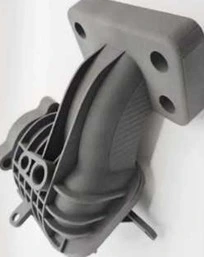
3D printing for small runs: MJF, SLS and Carbon DLS
These three technologies produce industrial-quality parts in series - without a mold, with immediate modification flexibility.
When is 3D printing more attractive than a mold?
For quantities under 500-1,000 parts depending on size, MJF or SLS 3D printing can be more economical than an aluminum prototype mold - taking into account tooling lead time (6-12 weeks) and modification risk. If the part still needs to evolve, print first, tool later.
Economical small plastic run
Ideal for 50 to 1,000 PA12 or TPU parts. Very competitive unit cost beyond 50 parts. Isotropic, reproducible parts, available in colors. 2 to 4 days lead time.
Functional PA small run
Ideal for 10 to 200 PA12, PA+GF, TPU parts with complex geometries, integrated hinges, assemblies. Maximum design freedom. No supports = no support marks.
Premium industrial production
Production-grade resins (EPU, RPU, SIL). Identical isotropic parts in series. Used by Adidas (Futurecraft soles), Ford, Medtronic. For volumes of 100 to several thousand.
3D printing is involved at every stage of product development - from the design mock-up to the production part.
Design and Aesthetic validation
Presentation mock-ups (SLA, PolyJet), design prototypes for ergonomics testing, tender models. Paint finishes available. 2 to 3 days lead time.
Presentation mock-ups (SLA, PolyJet), design prototypes for ergonomic testing, tender models. Paint finishes available. Lead time 2 to 3 days.
Mechanical validation and Assembly
Functional parts for snap-fit, assembly and strength tests. SLS and MJF for mechanical properties close to PA injection.
Automotive and Transport
Interior validation parts (SLA, SLS), light tooling (DMLS AlSi10Mg), mold inserts with conformal channels (SLM SS316L), small MJF runs.
Medical and Dental
SLA anatomical models, surgical guides (SLA, DMLS), titanium implants (SLM Ti6Al4V), CoCr prostheses, TPU orthoses, biocompatible Carbon DLS devices.
Aerospace and Defense
Light structural parts (DMLS AlSi10Mg), internal geometries impossible to machine, cooling channels, Inconel parts for high temperature.
Jewelry and Luxury
Models for lost-wax casting (DLP castable resin), jewelry prototypes, luxury buttons and clasps in PolyJet resin, small Carbon DLS runs.
Our 3D printing approach
From your need to the delivered part - CadNov selects the optimal technology and coordinates production.
Need and constraints
Function, material, precision, lead time, budget, quantity
Optimal technology
SLA, SLS, MJF, DLP, PolyJet, Carbon, DMLS, SLM
Certified partner
Quality control, report on request, delivery
Accepted file formats
What CadNov guarantees
What CadNov guarantees
Technology selected for your need
No default recommendation. CadNov analyzes your need and proposes the most suitable technology - even if it's different from the one you had in mind.
Certified partners, quality follow-up
Our manufacturing partners are ISO 9001 certified. Parts inspected on receipt, dimensional report available on request.
CII - up to 30% recovered
CadNov is approved by the French Ministry (MESR). 3D printing costs within an innovative project are eligible for the CII. File-preparation support included.
A 3D printing project? Quote in 24h.
Send your STL or STEP file - technology, material, quantity, lead time. Answer within 24h.
Request a quoteSee CNC plastic machiningAntoine ERRIGO · +33 (0)4 74 32 23 60 · direction@cadnov.fr · CadNov, 240 rue des Câbles de Lyon, 01000 Saint Denis Lès Bourg · CII-approved